
Radiators barely getting warm
Radiators lukewarm even with the boiler firing normally and the pump running — often sludge restricting flow through the panel.
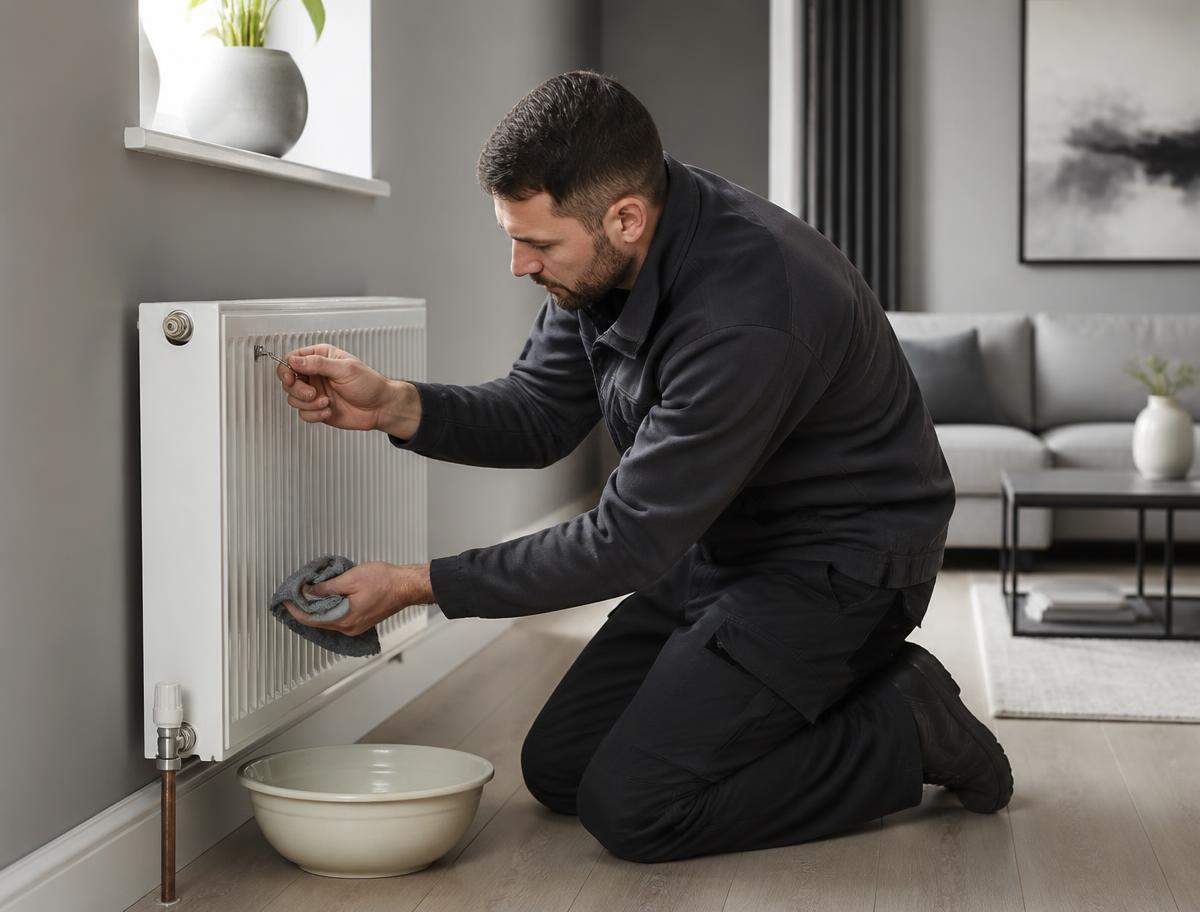
Central heating power flush · Barnet & North London
Cold radiators, banging pipes or dirty water when you bleed a rad usually means sludge and magnetite building up in the circuit — but not always. We check the system first, then clear it out properly if that's what's needed.
The basics
Every heating system collects sludge over time. Steel radiators and pipework corrode slowly from the inside, and that rust mixes with scale and general debris to form a dark, gritty residue called magnetite. It settles at the bottom of radiators, narrows pipework and clogs pumps, TRVs and the boiler's heat exchanger.
A power flush connects a flushing unit to the circuit and pushes a cleaning chemical through the boiler, pipework and each radiator in turn — agitating and breaking down the sludge so it can be carried out rather than just moved around. The dirty water is dumped, the system refilled, and a magnetic filter fitted or checked so the loosened debris gets caught rather than circulating again.
Cold radiators don't automatically mean you need one, though. Airlocks, a failed TRV, a sticking diverter valve or a tired pump can cause identical symptoms, so we assess the system before recommending a flush — not after.
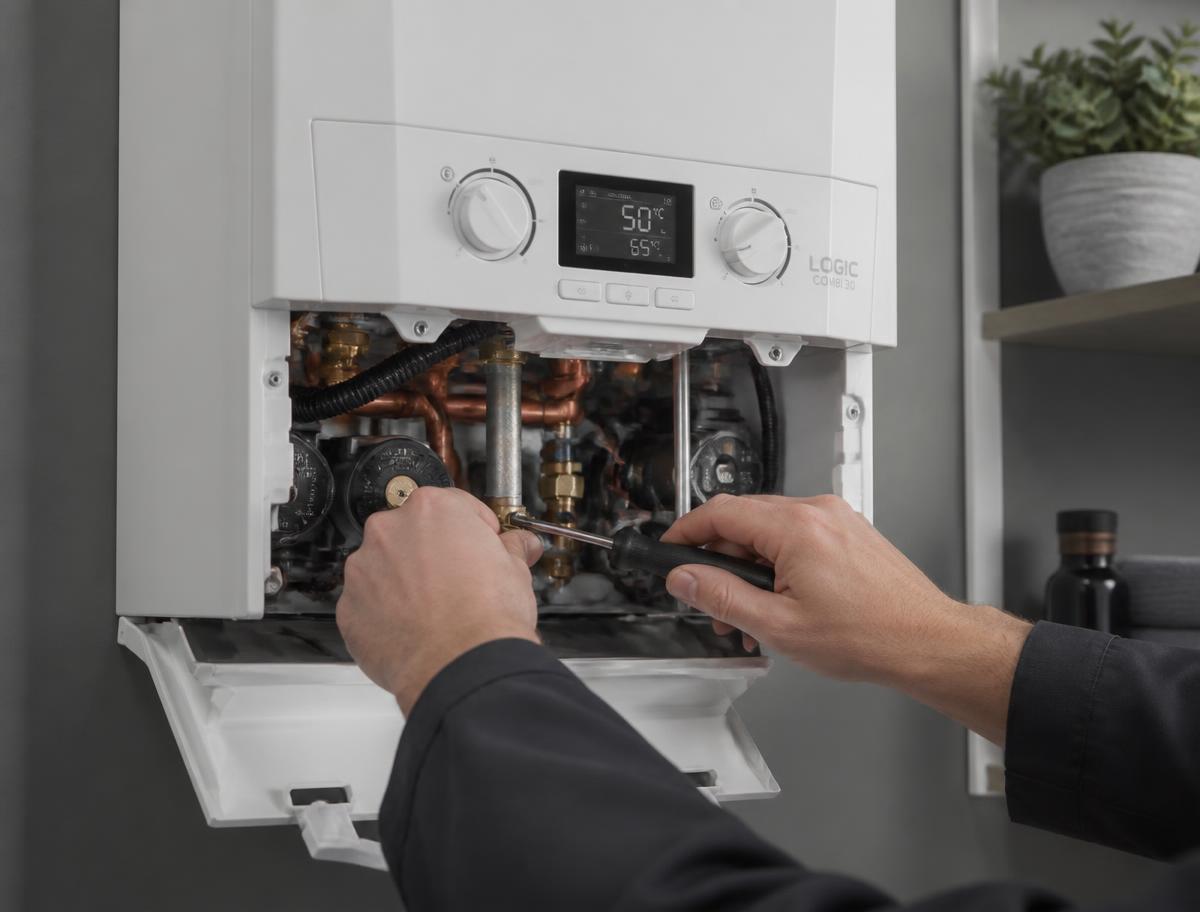 Magnetic filter fitted after flushing
Warning signs
These usually point to sludge choking the circuit — but not always. An airlock, a failed TRV, a sticking diverter valve or a weak pump can cause the same symptoms, so we check the system before we tell you it needs a flush.
Radiators lukewarm even with the boiler firing normally and the pump running — often sludge restricting flow through the panel.
Sludge and magnetite settle at the lowest point of a radiator, so the top heats while the bottom third stays stone cold.
The heating takes noticeably longer than it used to before a room actually feels warm.
Black or dark brown water coming out when you bleed a radiator is sludge in the system, not just trapped air.
Kettling and banging from the boiler, or a pump that's noticeably louder than it should be, can mean sludge clogging the impeller.
Some rooms warm fine while others stay cold — could be sludge blocking circulation, or the system just needs balancing.
Why it's worth doing
Where sludge is genuinely restricting circulation, clearing it makes a real difference to how the system heats and how hard the boiler and pump have to work. Results depend on the property and how bad the build-up was, so we'll be straight about what to expect rather than promise a fix before we've looked at the system.
If radiator problems turn out to be mechanical instead, our radiator repair service or a Gas Safe boiler repair may be the better route.
Local engineers
Junior’s Plumbing & Drainage is based in Barnet and works throughout Southgate, Enfield, Whetstone, Finchley, Cockfosters and the nearby Hertfordshire borders. That covers everything from old cast-iron radiators in Victorian terraces to modern microbore systems in flats — each one gets checked on its own merits before we talk about flushing it.
Any gas appliance work is carried out by Gas Safe registered engineers, and you get a clear price before anything starts. Read more about our team, browse all our plumbing and heating services or see the areas we cover.
We look at the boiler, radiators, valves and pump to work out whether sludge is actually the problem — not an airlock, a stuck TRV or a diverter valve fault.
The flushing unit is connected to the circuit, usually at the pump, and a cleaning chemical is added to break down sludge and magnetite.
Each radiator is isolated in turn, flushed and the flow reversed to shift debris settled at the bottom, while the rest of the circuit keeps circulating.
The dirty water is dumped, the system is refilled and dosed with inhibitor, then balanced so heat reaches every radiator properly.
A magnetic filter catches the metallic sludge before it can circulate again — we'll fit one if you don't already have one, or check it's doing its job if you do.
Questions
We connect a flushing unit to the heating circuit, usually at the pump or a radiator, then circulate a cleaning chemical through the pipework at high flow to break up sludge and magnetite. Each radiator is isolated and flushed in turn — reversing the flow to shift debris that's settled at the bottom — before the whole system is dumped, rinsed and refilled. Inhibitor goes back in at the end, and we'll fit or check a magnetic filter so the muck doesn't just build straight back up.
Not necessarily. Cold at the bottom usually points to sludge sitting in the radiator, but the same symptom can come from an airlock, a stuck TRV, poor balancing across the system or a weak pump. We check the system properly before recommending a flush — there's no point charging you for one if the real problem is a fifteen-minute valve fix.
Most Barnet homes take somewhere between half a day and a full day, depending on how many radiators there are and how much sludge has built up over the years. We'll give you a realistic time on site once we've had a look, not a guess over the phone.
If the banging and kettling is caused by sludge restricting flow through the heat exchanger or pipework, clearing it out usually settles the noise down. If it's air in the system, a failing pump or a diverter valve on its way out, flushing won't touch it — we'll tell you which it is before we start.
There's no fixed interval. Some systems go ten years without needing one; others silt up faster because of old steel radiators or a system that's never had inhibitor in it. A magnetic filter and a correctly dosed inhibitor, checked at your annual boiler service, slow the sludge coming back.
Yes. We cover Barnet and the surrounding areas, including Southgate, Enfield, Whetstone, Finchley, Cockfosters and the nearby Hertfordshire borders. Call 07983 111091 and we'll confirm your postcode.
Usually, yes — older systems are often the ones carrying the most sludge. But old pipework, ageing radiators and worn joints need a bit more care during a flush, so we inspect the system first and tell you straight if flushing isn't the right call for its condition.